The Trip to India: Taxis, Temples and God
by Jerry Sheinfeld
The actual trip to India took place for five weeks in August and September 1973. The Dawn Horse Magazine article was published August 1974.
The Dawn Horse Magazine, Vol 2, No. 2, Jubilee Issue August 1974
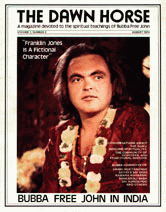
Dawn Horse Magazine
August 1974
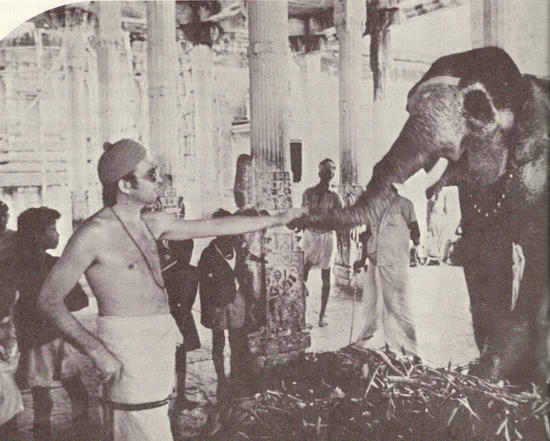
The next weeks were filled with preparations. Franklin said that when He visited Swami Baba Muktananda’s Ashram, Baba was impressed that He could comfortably sit in the lotus position. He said He expected me to learn to sit comfortably in such a position, that it would be embarrassing if His disciple had to sit in a chair while everyone else sat on the floor in the lotus. Franklin was always teaching by giving conditions, and they were always more than what they seem on the surface. I immediately intensified my attempts to find some comfort in that cross-legged agony.
At the same time I was given more responsibilities every day around the ashram. All this was to prepare me to serve Franklin on the trip. I had sheets of paper filled with things to do and my Guru was giving me more tasks all the time, either directly or through others. I felt a resistance to functioning arising constantly, but the demand was always present, so I had to just function and forget about the difficulty.
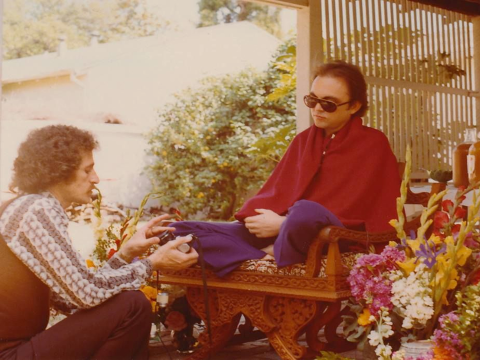
Once at a Prasad Day celebration at a friend’s house, everyone was sitting on the grass enjoying the relationship with Franklin, while listening to Him talk and show His signs of happiness. A friend came to me and said, “Franklin doesn’t ever want to see you anywhere without a clipboard in your hand. You should always be ready to take notes and function.” He laughed and said, “You think this trip is going to get you straight; the way I see it, Franklin is going to get you straight before you leave”.
Another day we drove to Malibu, where Franklin bought a conch shell as a present for Swami Muktananda. Along the way we were speaking about various things, and I felt very loving and happy to be with Him, but I became uncomfortable about just being casually or socially happy in His presence. I told Him, “I love You and that makes me happy to be near You and allows me to be totally open when I’m with You, but I also respect You so much that I feel a little conflict about that when I am around You. I’m beginning to notice that conflict.” Franklin said that my love was appropriate, but that the respect which held me away was my ego and a strategy of separation, a way of protection from intimacy and relationship. So I should see what I was up to and just love Him. I saw that when the protective activity wasn’t allowed to play in our relationship, I could simply be happy with Him, and the love was much fuller. Then true respect, which is an aspect of love, could take its appropriate form and intensify my devotional love.
Franklin said that I had to be especially humorous and free of complications on this trip if I was to do my job well, and that He expected me to do it thoroughly. For the entire three months prior to our departure, I was working through limitations I placed on my ability to function, while serving Franklin in practical ways. This opened me up and enabled me to feel very comfortable when I was with Him, even when I was feeling the intensity of His presence. It purified my devotional love for Him in all sorts of way.
When it came time for us to leave, I flew to Boston a day before Franklin left in order to spend some time with my family. Then Franklin went to New York to visit His parents. We planned to meet at Kennedy Airport in New York on the day of our departure to catch our Air India flight.
I took the last possible flight from Boston so that I could spend more time with my family. I had arranged to meet Franklin at a certain time to check in His bags and make sure everything was in order for the flight. My flight from Boston was delayed. After the plane landed, there was an unusual delay with the baggage claim, and it was already past the time we had arranged to meet. I began to feel my stomach churning with frustration. My flight arrived at the opposite end of the airport from Air India, so I tried to hail a cab. There weren’t any available. I had two heavy suitcases and a heavy camera case loaded with equipment. As I became more and more anxious, I started to walk fast to the Air India terminal, then I began to run. All the while I was thinking about missing the plane, making Franklin wait for me, letting Him down, killing myself and everybody else responsible for this situation. It was a hot day and I was sweating and tired, running across a very large airport. I finally got to the Air India terminal, muscles aching and red-faced. I had a tight knot in my stomach.
I entered the terminal and asked directions to the ticket counter. As I turned the corner Franklin standing right there talking to His father. He was so full of light. His eyes were glowing with such beauty. He looked at me and I immediately felt what I was bringing to Him. Instantly, I could feel how out of relationship I was, how completely self-concerned I was, how much I was suffering. At the same time, I saw Him, the great Guru who lives perfect relationship. His freedom and love were so obvious. I spontaneously surrendered all that I was bringing and opened freely into His relationship. I knew I couldn’t continue for a second longer in my suffering state. I had to fully function then and there. His obvious Love drew my feeling off me. The entire dilemma dissolved as I approached my loving Guru. He kissed me and hugged me and introduced me to His father. I saw that when one is put in a situation where avoidance of relationship, the act of suffering and seeking has no room to be lived, it is possible to turn to relationship and surrender all that self-limit. I checked our bags, confirmed the seats and took some pictures, openly and happily.
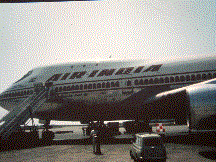
Once we were seated on the plane, Franklin’s joking was pure joy. He made fun of everyone and everything. He would say that he didn’t like something, or someone and expected me to change it. He felt the service from the stewardesses and steward’s needed to be improved. Nothing was beyond His humorous scrutiny. It was all about His play with me. He didn’t like the plane, the direction, or height it was flying. He didn’t like the seats or their location. The food needed to be changed. The video movies were not offering anything He wanted to see. He didn’t like anything and constantly asked me to speak to someone about each one, and expected me to have each one changed. At first I enjoyed His humor, but it required me to do something I didn’t want to do. That was to complain to the authorities about each things, to find a way to change it. But after a while all the authorities were disturbed with me and what seemed to be my dissatisfaction. I didn’t say it was Franklin’s disturbance, I let them know it was mine. Soon I wanted to cool it. But Franklin would have me speak to someone else about something. This stimulated real time disturbing emotions in me, because I didn’t like to deal with people in any way except softly, with what I thought was love and peace.
Before we left the flight and after letting me feel my tendencies, Franklin said I must take a bite out of life. I shouldn’t be afraid to use my emotions. They are a part of life and serve life. I should learn to deal with people strongly when necessary. He said anger is an emotion, there is no need to contract because of it. He said I should be free to feel and use all emotions and live freely by not reacting to them. Then he told me to complain again and have another situation corrected by requiring someone to function even though he didn’t want to function.
Franklin thought the whole teaching interplay with me was very funny and laughed a lot. I saw something of the strategy I used in life to keep myself calm and composed, and how it was motivated by the assumption that life is a dilemma and I must do certain things to avoid getting involved in that dilemma. My strategy involved being mediocre and agreeable, conforming to qualities like apparent love and peace and brotherhood and softness. But done as a way to not feel the suffering that is under those “good guy” strategies.
We stayed awake that night on the plane in order to make it easier to adjust to the time difference between New York and Bombay. When we arrived in Bombay, we checked into a hotel, and then walked around the city for the rest of the day. I was stunned at the desperate condition of some of the people in Bombay. Mingling on the city street were the working class, almost all dressed in clean white clothes or beautiful saris, and miserable beggars wearing rags, people living on the streets and sleeping on the sidewalks. There were great numbers of sick and lame people. It was a strange place, with cows roaming freely throughout the city. At first I felt sick at the sight of families with small children sleeping naked under a piece of metal, or a few rags which served as a lean-to. Many beggars were missing legs or arms or eyes or both or all.

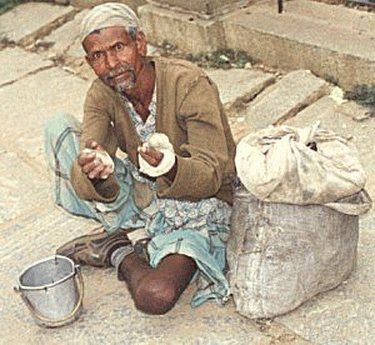
We met a beggar with one eye and a limp who could speak a little English. But he was a little insane; sometimes he spoke in riddles. Franklin asked him if he knew where we could find a good harmonium and a good pair of table drums. He told us to follow him. Franklin said ok. He led us down side streets, through alleys, over fences, in and out of taxis, into people’s homes, into the most precarious places imaginable. Franklin thoroughly enjoyed this adventure, and I did too, although I became a little concerned. In some of those places the people looked dangerous. Here we were walking into a back room or in an alley with new clean clothes and I was carrying a very expensive camera and bag, while there were people there that looked like they hadn’t eaten a good meal in years. At one place Franklin even said we should leave. When we finally did find a few harmoniums and tablas, but they weren’t what we wanted.
Franklin said that the condition of the Indian beggars is enough to make a person vomit, but he still made fun of the sickest of the sick in the free humor of God. To him, even people with no arms or legs living as vegetables in the worst conditions are perfectly okay. He would say, “What karma!” and laugh. But His laughter was always full of compassion and complete love. He could actually feel their condition of suffering and remain free. He said, “And our people back in the Los Angeles Ashram think they have it rough!”
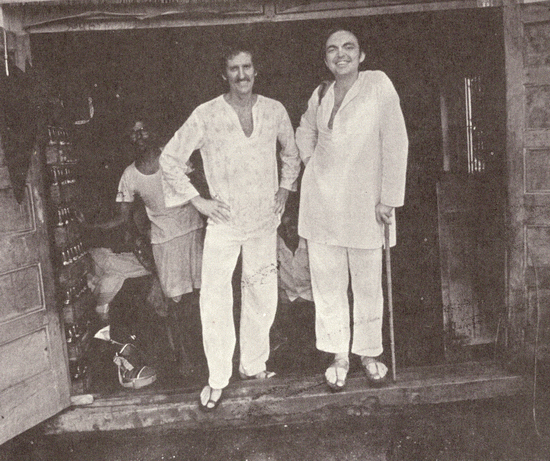
On the plane coming to Bombay, Franklin had sat most of the flight with his legs under His torso. In sitting this way for such a long time he hurt one of His ankle. So when He saw a rack of canes and walking sticks in this clothing store, He chose one and used it for the rest of the trip. When we returned to the Melrose Ashram He said “This stick has been in the dirt of every holy place in India”.
The next day we hired a taxi to take us to Ganeshpuri and Swami Muktananda’s Ashram. Franklin was quiet during the entire drive to the Ashram. He would speak only a few words when it was necessary, or in answer to a question. Franklin was silently intense quite often during the first weeks in India. He said that he was active on a subtle level and that this was the nature of much of the work for which He had come.
I had been looking forward to this meeting, because Franklin had said that He was going to Baba Muktananda as a devotee and was completely open to Baba’s confirming his role as senior Guru. Franklin had said that He had certain karmas to settle on this trip so that His work could be purified. He went to sacrifice all karmic influences on His own sadhana. I had the happy intention of meeting Franklin’s Guru and taking a lot of pictures of the beautiful reunion.
As we approached from the distance, we could see a large castle-like building surrounded by acres of orchards, gardens, smaller buildings and meadows. Franklin commented on how the Ashram had grown since His last visit. At the entrance were several flower stands where people sold fresh lower malas (or garlands) which they had just made. I purchased a beautiful mala to give Baba at our meeting. Franklin had brought a few gifts including a great conch shell He purchased in Malibu.
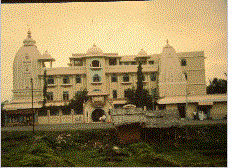
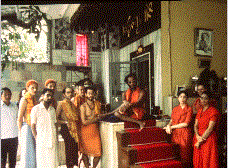
We entered and were greeted by some people who lived at the Ashram. They directed us to a courtyard where Baba was sitting.
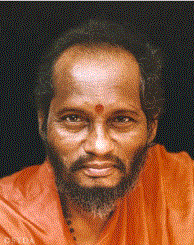
Franklin approached Baba, bowed at his feet, gave him the conch shell and a Rudraksha mala, and then stood to the side. I bowed and gave the mala and moved to Franklin’s side. Franklin just looked at Baba in his intense loving way and waited for Baba to begin any conversation. A few people, were lined up behind us to see Baba and give flowers, and they also approached as we had. After a short time, Franklin said something about the conch shell and Baba responded. He asked if I had ever been there before, and I said that I hadn’t. He said that I looked familiar. There was little conversation. We just stood there as more people came to give flowers. Baba made another comment and Franklin laughed. Shortly after that Baba got up and went through a small door behind him into the Ashram building.
Franklin said hello to a few people he knew, and we were directed to a room on the third floor where we could stay for the duration of our visit. The room had two single cots with mattresses, a small dresser and a ceiling fan. Nothing like our room in Bombay. We unpacked and lay down to rest for a few minutes before walking down the road to Swami Nityananda’s Ashram, about twenty minutes away.
Swami Nityananda’s Ashram is the main building of a very little village. Three building comprise the Ashram – his Mahasamadhi site (where his body was laid to rest), the building where he lived, and the room where he sat with disciples.
The village has a school for young children. The main and only street is lined with wooden booths where pictures, trinkets, and flowers can be purchased.
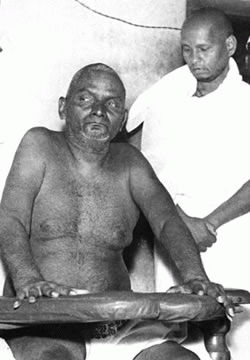
Swami Nityananda and Swami Muktananda
We went directly to the Mahasamadhi site: As we entered the large stone hall, I could see in the front the place where Nityananda was buried, it was roped off from the rest of the hall. It is a custom in India to walk around a holy place three times. Since there was no room to do that, there was an attendant who walked inside the roped-off area for us. Franklin sat on the floor there, and I did likewise.
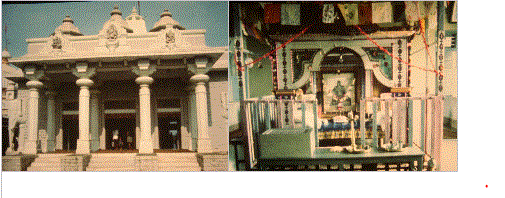
To me I felt the hall was a very strong feeling and happy place. Occasionally, children would run in one door and out another laughing and playing. Since there were no screens on the windows in other visits birds were seen flying in and out. We stayed for about a half hour, then left to return to Baba’s Ashram. Franklin said that Swami Nityananda’s Ashram had lost some of its force because people weren’t using it exclusively as a place of worship. When He had been there on His previous trip, the Ashram had been much smaller, Now a church-like building stood on the Mahasamadhi site.
Each morning we walked to Swami Nityananda’s Ashram and spent an hour or two there. We would visit all the buildings, and Franklin sat quietly for a while in each one. On our second visit a skinny sadhu wearing a loin cloth approached Franklin and asked if he could show us around. That man followed us to sit near Franklin whenever possible. Franklin really liked to go to Swami Nityananda’s Ashram each day, and the sadhu was always happy to see Franklin arrive.
Franklin asked if I had felt any spiritual force there. I said no. He said that the force could be felt in the vital. Swami Nityananda was a Yogi. Although he had transcended the limitations of yoga, his force and movement could be felt in the seat of yogic work, the vital or stomach area. His work was involved in purifying the vital. Franklin said, He could feel the force primarily in the vital vehicle at this Ashram.
After we arrived back at Baba’s Ashram, we attended the late day chanting and meditation, then ate dinner in the dining room. The majority of the people at Baba’s Ashram were Westerners, many of them Americans, but Baba’s immediate staff were almost all Indians. We stayed there five days. The first couple of days we attended all the chanting meetings, about four each day. When Franklin found out which of these were mandatory for guests to attend and attended only those. By the end of the stay, Franklin had stopped going to any chanting meetings. He said that all this chanting was simply a form of “crowd-control.” It was an external representation of the more serious internal sadhana of attention to God.
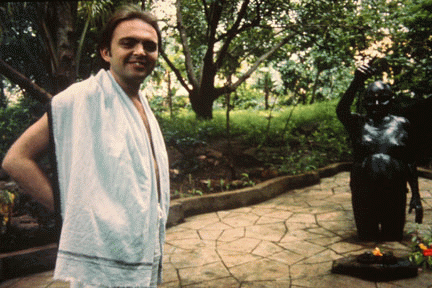
After a few days at Baba’s Ashram, I began to feel bored with everything. I told Franklin about this feeling. I said, “I know I can’t get inspired by the chanting. I don’t even understand the Hindi language. Every time I try to muster a little religious reverence, it shows itself as a mediocre attempt and every one of my attempts to get with these Ashram functions is frustrated and seems to fall flat. I’m really bored. There doesn’t seem to be anything happening here, and I feel numb.” Franklin said that most of the time people distract themselves in high or low states, excitement or mediocrity. Boredom is just another distraction, because right behind that feeling is an enormous fear, an enormous dilemma. The state of boredom is useful because it isn’t a usual state, but it must be transcended like any other condition. The dilemma must be experienced, rather than the distraction, and it must be understood.
We saw many people at that Ashram who reminded Franklin of our people in Los Angeles, and they showed me what would have happened to all of us if we had continued our spiritual seeking. Franklin said there are mainly two types of people in the world – those who never get the message of life and walk around stupid and in a daze, and those who see a message in everything and become so serious and concerned that they can’t do anything freely.
Each day and evening Franklin wrote in His notebook. He never just did nothing, and nothing He did ever tired Him.
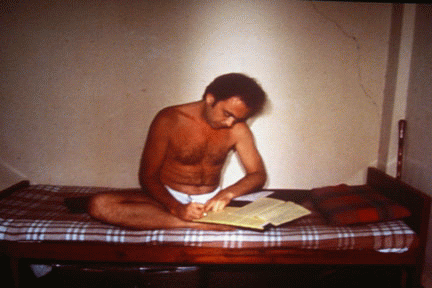
By this time I had spent several days and nights in Franklin’s constant company. He was very intense and somewhat withdrawn and quiet. I knew He was doing something important, because His eyes were very intense and I could feel a slight pressure coming from Him within me. My love for Him was growing deeper by the moment. He was both somewhere else yet very present, and always in the midst of this intensity, His humor never decreased. He kept helping me relax by using His humor in making fun of everything, including the conditions and the way of life at Baba’s Ashram.
One night when we returned from a trip visiting some temples in the area, we went directly to our room. I immediately began laying out the camera equipment to clean off the dust it had accumulated during the day. Franklin asked me to give Him a foot massage. I hesitated because I wanted to finish what I was doing. He said that I must be as functional as a chair at all times. I immediately began massaging His foot.
As I was massaging Franklin’s legs I kept most attention on the camera equipment feeling what pieces to clean first once the massage was over. Eventually I noticed the massage was taking a very long time and turned my full attention onto doing it. As soon as I did that Franklin said, “That’s enough”. The lesson was obvious.
The next morning Franklin told me to get my camera and the tape recorder, because Professor Jain, Baba’s English interpreter had arranged a personal meeting with Baba in his private room and it would start right away. In anticipation of the meeting, Franklin had written down certain questions He wanted to discuss with Baba. The written questions were to prevent any misinterpretation. Professor Jain came for us and let us into Baba’s room. Ama, Baba’s secretary was already there.
When Baba arrived the meeting began with Franklin giving
Baba a conch shell that He brought from America. Then
Franklin gave Baba a safari hat that had a battery operated
fan built in the front. Some laughter ensued and a little
light conversation. Baba then gave Franklin an orange cap. I
was busy preparing the tape recorder and taking a few
pictures.
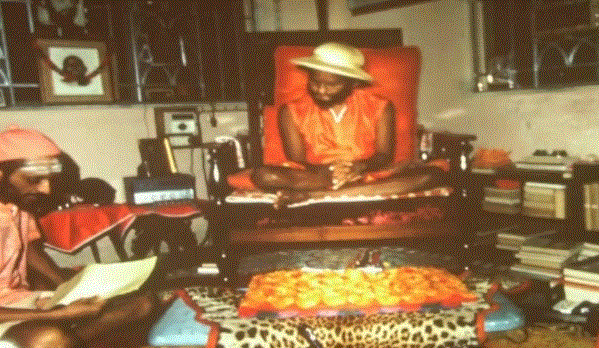
I felt the energy of the meeting was intense. Franklin gave Professor Jain a copy of the questions, and He kept one for Himself. The questions were very important since they addressed Franklin’s Realization and He wanted to see if Baba’s Realization was the same, or even greater. Franklin told me before we left on this India trip if Baba’s Realization was greater than His, Franklin would turn all His devotees over to Baba. But Baba didn’t want to talk about the questions, other than to undermine Franklin for wanting to ask such questions, as if the questions weren’t important. So the questions didn’t get addressed in any detail. Seems Baba wasn’t interested, or able to address the questions. He turned the meeting to his interests. So instead of comparing His Realization to Franklin’s, Baba wanted to talk about Franklin’s devotees serving his trip to the United States. I felt since Franklin’s questions were so important, for Baba to basically ignore them disturbed me.
The meeting ended, Baba left. I gathered my equipment and followed Franklin out the door. I was really disturbed with Baba’s non response and how he turned the meeting to such a less important subject. As soon as we were outside the meeting room, showing my disturbance, I said to Franklin, “Are we going to stay here?” Franklin laughed and said, “Here’s my plan – find the first bus outta here. Let’s get packing.” Within about twenty minutes we were packed and ready to go. As we walked through the courtyard to outside the Ashram, Ama called to Franklin from a distance. He didn’t turn but kept walking while raising His arm and waving good bye to her. The bus came and we headed for the train station.
Franklin said that Swami Baba Muktananda was a yogi and that his teaching was the way of the search. He had shown that he hadn’t transcended that limitation as a seeker who misunderstood reality and created separation in subtle ways.
Franklin said that He was very happy about the meeting turning out as it had. Everything was out in the open, and the karmas of relationship with Baba had been purified and broken cleanly. There seemed to be a weight lifted from Franklin by this break. He was now able to function as Guru without the involvement with any living Gurus. Rudi, His other teacher, had died prior to the trip. Franklin said that this freedom was very good for our work.
I had now spent several days in Franklin’s intimate company, and it was quite apparent that He never loses that state of comfort and ease. In my life I’ve always had to find time to reorganize my composure, a little time alone to automatically set up another strategy to deal with life. But Franklin just keeps on flowing. He had just let it all go. He never had anything to let go of. Even though my awareness of His total freedom was limited, He reflected my limits to me and caused me some self-referring understanding and discomfort. He also never gave me time for myself. I always had to be out front with open feelings.
We returned to Bombay and the Taj Mahal five star Hotel. We had a fine room with air conditioning, and lots of comfort. The next morning we went to the dining room for breakfast. I followed Franklin’s food ordering, but when the toast came I took some jelly from the platter on the table and spread it on the toast. Eating it felt very consoling, very pleasing to my preference for sweets at the time. Franklin didn’t address anything about it there, but when we returned to the Los Angeles ashram, when asked about the trip Franklin told them they should have seen Jerry with his jelly toast. He said He was sitting just across the table radiant in His Gift of Divine Awakening, but all Jerry wanted to do was eat jelly toast. To emphasize His comment and keep the lesson alive, Franklin gave me the name “Jelly Toast”. Everyone called me that for over a year.
The contrast between ashram life the elegant hotel living was very impressive. It seemed they both had qualities to be enjoyed. The ashram was about transcending the conditional self, adding devotion and spiritual experiences. The five star hotel was about supporting the self-sense. It had lots of comfort, consolations, and general enjoyments and also Jelly toast.
We stayed one night, then left for Shirdi Sai Baba’s Mahasamadhi temple.
>
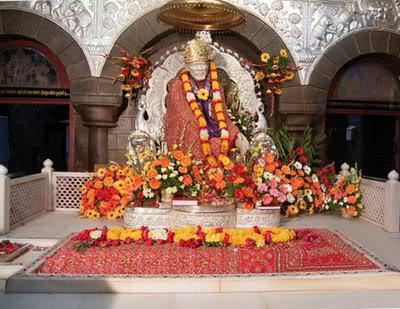
Franklin was fairly quiet on the way. When we arrived He walked ahead right into the temple without waiting. In the temple people were standing and sitting around a large white marble slab under which Sai Baba was buried. There was a large white statue of him in front of the slab. Several devotees were sitting around the slab chanting and placing flowers in different patterns all over it. Occasionally one would sprinkle water. Franklin and I stood in front, then were given permission to approach the shrine. Franklin approached and bowed, touching His head to the marble. I did the same. We then placed some flowers on the slab and sat on the floor in front of it. Soon attendants performed another ceremony with fire, and there was some ongoing chanting. One of the attendants was full of energy. He was smiling happily. He obviously enjoyed devoting his life to serving His Guru’s holy shrine. Franklin said the priest was a good man. You have to understand this priest does the same puja around his Guru’s shrine every day for his entire adult life, and he still shows His fresh and bright devotion”.
We stayed for a while until Franklin said, “Let’s go,” and I knew His work was done there. Franklin was always working, and we never lingered anywhere after Franklin had finished His business there. He always made it a point to touch the shrines and Guru images whenever possible. Franklin said Shirdi Sai Baba’s temple was “good”; it had a lot of force. He said that Shirdi Sai Baba was a saint and his work was the purification of the subtle vehicles, but that he had transcended that limitation. His force could be felt in the Sahasrar, the top of the head.
Franklin never spoke specifically of what He did at each place we visited, but it was obvious to me that He wasn’t going to receive something, but rather to purify and Empower each place. Later in the trip Franklin said the reason a place remains holy is not just because some saint lived there once, but because people have done and are presently doing sadhana there. The responsibility of saints and holy men is to visit these places periodically and purify them. This keeps the force alive.
We returned to our cab and visited a few more places on the way to Poona in southwest India. The Raja of Bhor (Sri Pantsachiv) was a friend of Franklin’s who invited Him to stay at his home during our trip. The Raja was a nice old man. Franklin and he had never actually met but had formed a relationship through the mail. We stayed for a couple of days.
It was a joy to see the respect Franklin was given by Sri Pantsachiv’s and his staff. He was a disciple of the late Narayan Maharaj. When we left, he instructed his driver to remind us to visit his Guru’s Ashram. He provided a car and driver for our use. (Sri Pantsachiv had more recently been a personal follower of Ramana Maharshi and J. Krishnamurti).
Every night where ever we were on the trip we’d have two beds next to each other for sleeping. When we meditated we’d sit on our beds and I’d face Franklin just a few feet in front of me. One night we were sitting in meditation as we did every night, but this evening I had to go to urinate and couldn’t wait until meditation was over. So when I noticed Franklin’s eye were closed, I quietly got up and tip-toed to the bathroom. During urination I made sure it didn’t make any noise, then returned to my bed for more meditation. As soon as I sat back down Franklin said, “Where did you go?” I said I had to urinate. He said, “Don’t ever do that again. Who do you think I’m meditating?” Needless to say I felt terrible over being so unconscious.
We visited Tukaram’s tomb, which was supposed to be a forceful place, but Franklin said Tukaram’s force and other things that had happened at and around his tomb had faded. Franklin told me a bit of Tukharam’s history. He never stayed home to help around the house, but each day he walked to a near-by hill and spent the day in meditation on that hill. His wife always criticized him not helping her. Tukharam acknowledged her a “Sadhana Murti”. Her criticism moved him to greater and greater self-transcendence.
We were told about a man named Diling Yogi and went to visit him. He offered us tea in his large room. Just as he was about to try to impress us with his yogic experiences, Franklin told me to, “Give him the book”. (I carried copies of The Knee of Listening in my case at all times. I handed him the book and explained that Franklin had an ashram of His devotees in America. He had come to do certain spiritual work in India. Then as he glanced at the book, the price, the pictures, and some of the words, I remained silent. Franklin was always working in silence at all such contacts. Diling Yogi put the book down, and we all sat silently for a few minutes until Franklin said it was time to go. I thanked Diling Yogi for the visit. I also felt he should have thanked Franklin because, in fact, he had received Franklin’s Darshan.
We heard of another yogi (I don’t remember his name). He was acknowledged as an adept in raising the kundalini in people who turned to him even over long distances. When we got there we were informed that he was ill, but we would be allowed to enter his room for a short time. We went upstairs to his private bedroom where he lay attended by servants. We sat to one side for a minute or two and then Franklin said “He can’t even raise his head, never mind the kundalini. We had better leave before he dies in front of us.”
Often during the trip especially when we were alone for a long time, like in a taxi or train, Franklin would be very quiet and intense. I often was disturbed by it. I felt that He didn’t want to talk to me. He didn’t like me. I knew how self-contracted I was, so I felt He didn’t want anything to do with me. As a result I felt rejected and would become very sad. Then Franklin would say something to me, or smile and I would feel happy again. This happened again and again. I felt rejected, then loved. I eventually recognized, that He was intensifying my self-reactive patterns to help me gain self-understanding. And in doing so He was also intensifying my attention to Him. I was thinking about Him whether I was feeling loved and happy, or rejected and sad. His intensity was so strong and constant that my feeling of Him were also constant. Sometimes there were bodily sensations of heat and real pressure in the head and chest as well.
One day when began to feel rejected Franklin said to me, “When I relate to you and act friendly, like a nice guy, you are happy, but when I try to give you something of My quality you always react.” He said that I must allow myself to relate to all His qualities. His intensity is His attunement with God.
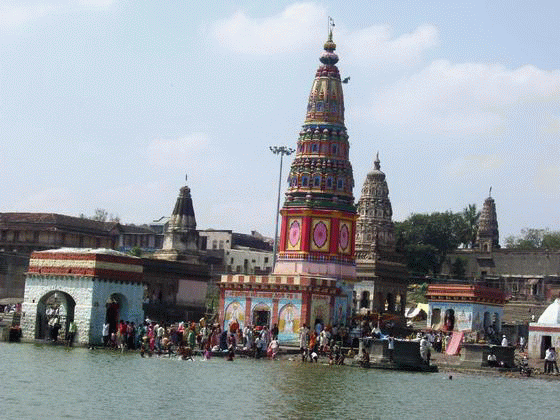
The next day we went to a very large and famous temple at Pandharpur, dedicated to Lord Vitoba. There were long lines of people waiting to enter. As we stood in line, I felt that all my attempts to create enthusiasm through religious feeling at these historic holy places had fallen away. There were all the places, temples, shrines, statues, and all these people approaching them, some to surrender some just seeking to gain something. I saw clearly how seeking doesn’t transform one’s life. It only gives one something to hang on to and to seek more of. I felt the Indian masses are all basically religious, it can be seen all over the Country. Also some especially at the ashrams had matured into devotional responses to their Gurus. But generally it seemed to me, that performing rituals and ceremonies didn’t necessarily serve self-transcending. I saw that devotion to God must be lived presently. At any time when I would begin trying to get serious in a solemn way at a temple, Franklin would always make a humorous comment, always bring me back to self-understanding about seeking without true feeling. He is completely free to enjoy everything, and He is constantly revealing that His State is that enjoyment.
We left Pandharpur temple and headed again for Bombay. I spent many hours in taxis with Franklin, and these were among the most intense times for me. There were several times when we didn’t speak for several days. I was constantly thinking of the process of understanding, constantly feeling an intensity in my stomach, my chest and head. I felt that pressure type sensation almost all the time. I would read, or write, or just think, but I was constantly involved in working out the teaching. This thing about understanding and always living in relationship was becoming a major concern to me. How do I stop avoiding? The mind doesn’t stop and is a real attention getter. I kept trying to figure it all out. I became aware of my constant self-aware avoidance of relationship and mentioned that to Franklin. He said, “How many times do you have to see the avoidance to know that you are suffering? To put your attention there isn’t this teaching.” He told me that I had always done that my whole life. To turn to Him in relationship and live that relationship is the teaching. I knew that, but I wasn’t doing it well.
On the way back to Bombay the driver reminded us of Narayan Maharaj and said that his Ashram was only twenty minutes down this dirt road. Franklin told him to go there. We arrived at a nice little village in the middle of nowhere. We entered the main temple and were greeted by four men and a two ladies who lived at the Ashram. They greeted us warmly and offered some tea. I told them that Franklin was my Guru, that He had a large Ashram in America, and that we were visiting India for a few weeks. The men were very attracted to Franklin; wherever He sat, they would gather.
They proudly showed us through the upper rooms where Narayan Maharaj had lived. Franklin enjoyed looking at some of Narayan’s unusual personal possessions, including beautiful decorative caps with silver and gold interwoven threads, also expensive vests and pants outfits. But most of all Franklin especially liked the full-sized silver palanquin richly inlaid with jewels. We stayed at the Ashram for a few hours. The men and just hung around Franklin. They would sit on the floor in front of Him and look with great respect. They were also fully available to Franklin, always ready to answer questions and tell stories about their Guru.
Franklin said these were good men and women, but they were not completed devotees. That Narayan Maharaj had died too soon for them and these devotees were just waiting around. He said they had the potential to be completed, but no one was there to do it. Franklin said He felt their responsiveness. Then He said, “We will ship them to Los Angeles”. And joked about how we’d get them onto the plane as stowaways, in vegetable crates.
Franklin said Narayan Maharaj was a good man. Whenever Franklin used that phrase, “a good man,” or ” a good place,” it meant the person or place was consciously involved in the spiritual process.
We had seen one of Meher Baba’s Ashrams in Poona and I was interested to note that two of his Gurus were Shirdi Sai Baba and Narayan Maharaj.
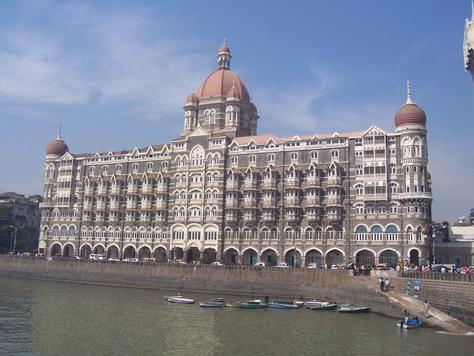
We returned to the Taj Mahal Hotel. The next day I was traveling by taxi through Bombay to the film processing lab. Franklin remained in the room, My mind was filled with thoughts about relationship and avoiding relationship. I couldn’t get a clear understanding of what relationship exactly is. I had always thought of it as a big event, something special, and something to be accomplished. Even though by Franklin’s Grace I was living some degree of relationship with Him, I didn’t recognize that as the relationship spoken of in The Knee of Listening. Now in the taxi everything became magnified. I became intensely concerned. A full emotional crisis had developed as the result of my resistance to Franklin’s silent heart-Awakening intensity. Everything was miserable and I was completely alone. I hated the driver and wanted to kill everyone on the streets. I kept trying to see something of my activity and apply the teaching. The crisis had captured my entire attention.
Then, like a flick of a switch, with no effort, I understood. Immediately, everything changed. Everything was now all part of a great enjoyment without seeking. The freedom of such strong self-contraction, to immediate understanding caused me to laugh out loud. The driver must have thought I was crazy. He kept looking back through the mirror, but now I loved him and smiled that acknowledgment. In a moment, without effort, I saw that relationship is all there is, that I was only constantly distracting myself by seeking answers and way to work out problems. I saw simply that it was no big deal, no seeking effort, no accomplishment, and certainly not a complex intellectual discovery, or something mystical. I saw the way to be happy is through self-understanding and surrendered feelings by turning and allowing Franklin’s radiant Love Presence and great Wisdom to penetrate my seeking mind, emotions and body. It was obvious in this lesson that suffering can’t be worked out. That Franklin’s Gift is felt by turning everything to Him.
I saw that there is a mechanism preventing direct relationship, but it didn’t matter anymore. I knew that Franklin had given me the gift of his Grace. Through turning attention directly to Him I saw that relationship could be enjoyed with everyone everywhere. It wasn’t anything extraordinary. In that moment, everything became completely natural and humorous.
Later I mentioned this to Franklin and He laughed and said something like “See, I told you!” He said I could mention something of this to the ashram when we returned, but He didn’t make a big deal of it. The more I understood, the more I saw Franklin was always only living perfect relationship. He was always perfectly present and always full of humor.
One day Franklin said, “Jerry, don’t turn to your left. Don’t move at all, but behind you, to the left is a stone. Behind that <!DOCTYPE HTML PUBLIC “-//W3C//DTD HTML 4.0 Transitional//EN”>stone is a dead rat, and that rat is the Avatar of the age.” He continued with this humor for a few days. “See that man over there? He’s the Avatar of the age”. See that child, don’t stare.” I’d say, “Wait a minute, you’re the Avatar of the age.” He said, “No, Jerry, relax, but that guy with one arm, He’s the Avatar of the age”. That’s the way He played during parts of the trip. And why in that way about the Avatar of the age? Only He knows what was behind it. But to me it was total delightful humor and at some level it was addressing something important.
Throughout the trip I noticed how Franklin’s conscious awareness was obvious in everything He did, including how He liked everything around him to be neat and orderly. For example, one day when we were in a hotel I showered, dried with a towel, and threw a used towel under the sink, knowing it would be removed by a maid. When Franklin saw the towel He told me to fold it and place it neatly on the floor in the corner. I said, “But it’s dirty.” He said, “That’s no reason for it to be messy.”
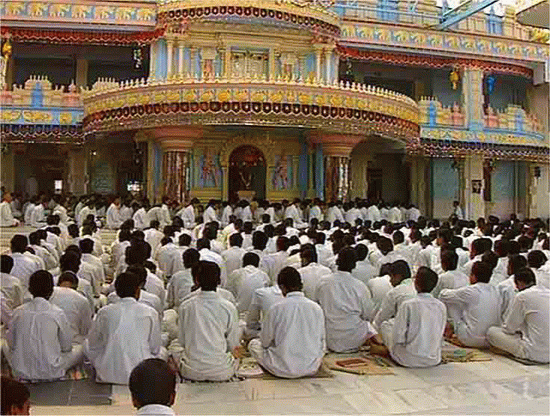
The next day we left Bombay for Sathya Sai Baba’s Ashram. The first day there we joined about two hundred people sitting on the grass in front of his house, which is also the temple. The people formed a semi-circle and waited. (It still amazed me how Franklin would submit to sit with other in front of so many less realized people who call themselves guru.)
After a short time Sathya Sai Baba came out. I looked to Franklin. He was very intense and concentrating on Sathya Sai Baba. Sathya Sai Baba walked in front of the people and occasionally stopped to touch someone on the top of the head, or the Ajna Chakra. Occasionally someone would give him a note requesting his blessings. At some point Satya Sai Baba did what was really impressive. He materialized Vibhuti, a ceremonial sacred ash used in Hindu rituals. He moved his wrist around a few times and then from his fingers appeared some white ash. He placed a little on different people’s foreheads. I was very impressed and using my close-up lens on my camera I looked for ways the ash could get to his fingers. But I couldn’t see any trickery.
That night, Franklin told me that the next day when Sathya Sai Baba materialized something, I should stand up and ask him to do a baseball. Franklin said Sathya Sai Baba doesn’t actually create anything, he simply transports it from one place to another through subtle siddhis, or forces.
Satya Sai Baba dressed in orange robes which were well tailored casements of silk and other fine fabrics. Franklin said He liked the way Sathya Sai Baba dressed – his tailor was good.
Each day Satya Sai Baba never looked at or acknowledge Franklin in any outward way.
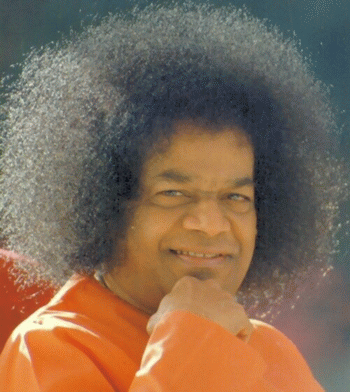
We stayed there four days. Franklin enjoyed the layout of the hills surrounding the Ashram, but He said, “the ashram is a place of magic,” He said there was no true devotion between the disciples and Sathya Sai Baba, because their attachment was motivated by fascination. Miracles don’t create true devotion.
Another day I was trying to take a picture of a hawk in flight. As it moved, I kept resetting the camera and refocusing. Franklin was watching. After a few minutes or so with no picture taken He asked for the camera. With complete confidence He pointed it at the bird and took a picture. No hesitation. He said this wishy-washy oscillation is a waste of energy. Just do it. Franklin’s photo came out perfect, naturally.
There were a few Americans at that Ashram and some of them had heard of Franklin. One of them in particular, a girl, kept asking me if she could meet Franklin. I told her that He wasn’t there to teach, or meet with people, but that she could ask me what she wanted, and if I didn’t know I would ask Franklin for her. This didn’t satisfy her; she simply wanted to be near him. I told Franklin about her He said I should answer her questions. One night I returned to our room from a trip to the local store and found her sitting with Franklin in our room. Without asking and in the middle of her sentence, I took her arm and asked her to join me outside. Once on the porch I told her not to bother Franklin with anything. If she had something to say to Him, she could tell me.
Franklin didn’t want to have to deal with people other than the ones He had special reasons to see, and most of them were not bodily alive. By this time, something different seemed to be happening with Franklin. The past few weeks had indicated some changes in His Work were needed. What I felt was very subtle. His presence was very strong, very upright and definite.
While still at the ashram several people mentioned Neem Karoli Baba and asked if Franklin would see him. The Raja of Bhor had mentioned his name also. Franklin asked me to get his address and sometime later in the trip we would visit him. Before we left Los Angeles this was the only address Franklin didn’t have. He said to me, “See how things always work out?” One night while still at Sathya Sai Baba’s Ashram Franklin had a subtle contact during sleep with Neem Karoli Baba. He said we approached each other while throwing away everything. Then we embraced in total Divine ecstasy. Franklin said He felt it was unnecessary to visit him physically.
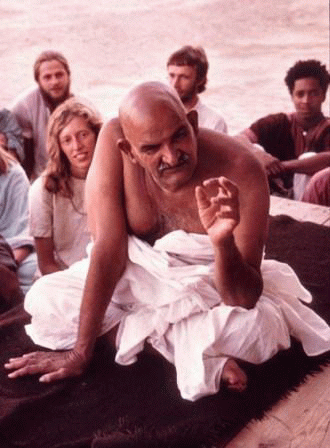
Each day Franklin was still writing in His notebook. One day while on the porch in front of our room Franklin said that we would have to have a name for the University we would incorporate some day. He asked, “What did I think of the name “Shree Hridayam University”? “Shree Hridayam” was the name of our Ashram in Los Angeles. I said it was too Indian.
He came back a little later and said, “What about Free John University?” I thought awhile and said, “It certainly isn’t Indian.” He said, “Do you like it?” I felt more and said “No.” He seemed displeased with my response and said, “Well, that’s the name.” Later that day I was writing a letter to my intimate partner when Franklin said, “Tell her to tell the Ashram to call me Bubba Free John.” I laughed, thinking it was a joke and wrote, “Tell everyone from now on to call Franklin Bubba Free John”. I thought it was a humorous name. But then I realized that Franklin was serious. He said, “I want you to also call me Bubba Free John from now on,” He told me to write a letter to the Ashram in Los Angeles and formally tell them of the new name.
I didn’t realize the significance of His new name, and it wasn’t made clear to me until I realized it sometime after our return to Los Angeles. The Enlightened person called Franklin Jones had changed. The Work He now knew He had to do was as a Divine friend.
I began calling Him Bubba from that time on. However, a few days later I called him “Franklin” and He raised His eye brow and said, “Franklin is dead. I am Bubba Free John.” Another time I said, “Frank–,” but caught myself. He gave me a half raised eye brow.
At Sathya Sai Baba’s Ashram and throughout our trip, people would show that they were very aware of Bubba’s presence. Wherever He walked, people would look at Him. Some would try to approach Him. People wanted to be around Him. When we would go into temples, the people meditating and the priests that served the temples would acknowledge Bubba as he came in, by smiling, or nodding reverently. They would make room for Him to walk and sit. Where ever He was He would shine. Wherever He went, you could pick Him out immediately. There was a physical radiance and intensity about Him. He started wearing sunglasses so that His eyes would be covered. I had to do the ordering in hotels and restaurants because He would be sitting there in silent Divine Samadhi.
Throughout the trip I became more and more aware of the intensity that was necessary to live the practice of understanding and transcending the avoidance of relationship. Many times during the trip I didn’t do sadhana. I just lived off Bubba’s intensity. But I saw how I must do my own sadhana. I saw the mind must be disciplined. If it isn’t, it will run from one distraction to another like an uncontrolled child. To live from the point of view of relationship is a fantastically intelligent activity. I saw how my love for Bubba gave me the desire to stay in relationship and intensified the awareness of the condition of consciousness. I saw that the difference between using the gift of “enquiry” (avoiding relationship?) as a mantra, or a technique, and really enquiring from self-understanding and devotional response is one of involvement and intensity. One must be alert at all times to enquire. This alertness comes only through being straight with right life conditions and continually turning in devotion to Bubba.
Bubba said that my tendencies will continue to arise, but I am not my tendencies. I needn’t get involved with them. I must simply stay in relationship with Him at all times. The more I am in relationship, the easier it is to return and stay in that self-transcending disposition. He said it is all right to have all sorts of tendencies, I needn’t get involved in separation due to any tendencies.
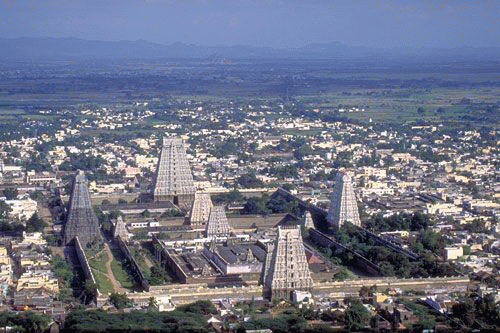
Early the next evening after a full day of travel we arrived at Ramana Maharshi’s Ashram (Sri Ramanasramam). I went to the office and introduced Bubba and myself. Bubba remained in the taxi. I told the man that we had written of our intended arrival some weeks earlier and requested a room to sleep in. The man was very pleased we had arrived and went right outside to meet Bubba. Immediately he showed appropriate respect and offered his assistance in meeting any of Bubba’s needs. We were shown to a private room across the street from the main temple, where we put our bags, and immediately Bubba left for the main temple to Ramana Maharshi’s burial (Maha-samadhi) site.
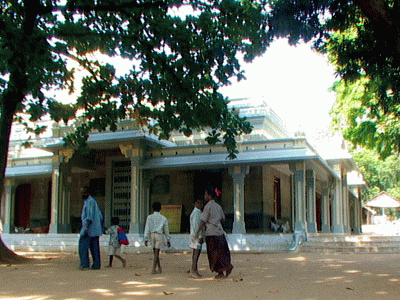
It was a large room with a large black shrine at the front. A white marble platform indicated where Ramana was buried. Bubba walked around the shrine three times as is the custom, then bowed in front and sat on the floor. We stayed for about an hour, then returned to our room.
Bubba said the Maha Samadhi hall was a very powerful place, as soon as He entered He was taken over with an incredible force. He said Ramana was the Heart and his force could be felt in the Heart to the right of the chest. Bubba told me Ramana’s realization was similar to His, and that He also directly felt the ascension of force from the Heart to the sahasrar (top of the head) in that room.
The next morning we were greeted by a guide who was to take us up Arunachala hill to a hut where Ramana Maharshi had lived for many years.
Because it is a holy hill, the custom is to remove the sandals to climb the hill. I asked Bubba if we could wear our sandals. He said, “You wouldn’t wear them in a temple. This hill is a temple”. We began the climb the steep hill, fortunately there were large and small stepping stones along the path.
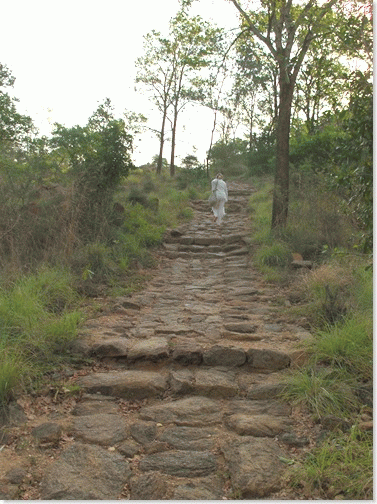
Bubba showed no discomfort in this challenging up-hill climb. I however did. The camera bag I was carrying was heavy and becoming heavier. The day was very hot, and thousands of gnats and plenty mosquitos were everywhere. When we reached the hut, called Skandashram, Bubba went inside and sat silently.
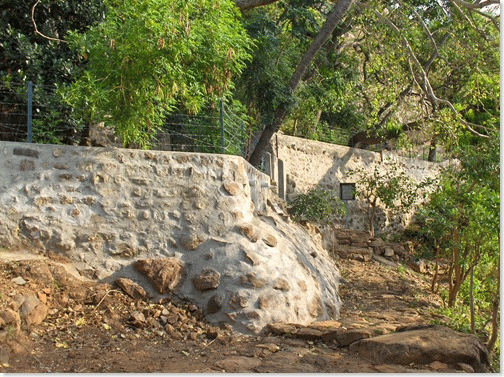
I prepared the camera and entered to take a few photos. Some gnats got in my eyes and all over my sweaty eye lids. I was uncomfortable and reacting to it all. I took a few photos and then sat down just as Bubba got up to leave. I arose and followed, but on my way out, I didn’t notice the low door casing and smashed my head against it. The smashing was so strong I almost passed out. I definitely saw stars in my head. As I basically fell through the door, Franklin noticed and asked if I was ok? To me everything was going wrong. We were at one of the purest places in the world, and I was in a state of crisis. How appropriate to address self-understanding.
The Skandashram was small-one room hut, with a picture of Ramana at the front. Bubba said second to His Temple (Sukra Kendra) Skandashram was the most forceful on earth. I certainly felt something of the intensity, but I drew it to self-concern. We walked down the hill by way of a cave where Ramana had spent some real time. A man and woman lived in the cave and cared for it with their lives. They looked like prehistoric cave dwellers. Both had very long matted gray hair. They looked old with wrinkled faces and un-kept clothing. There was a fire burning in the cave, which it seems they cooked food over and kept them warm. I asked permission to take a picture, but it was not allowed. I was told later they never left the cave but food and other supplies was brought to them as needed. What an amazing sign of devotion to their Guru.
The rest of the day we spent visiting the different rooms where Ramana had lived, and gave His Blessing Darshan.
One day an old bedridden devotee of Ramana sent word asking Bubba to visit him. He just wanted to make contact with Bubba. We went to his room and some social conversation ensued. Then Bubba asked about the times when Ramana was alive and his experience with Ramana. The man was so happy to talk about his Guru and told a lot of wonderful stories. After a while Bubba moved us to sit silently with Him. Bubba’s Presence was communicating Divine Reality to this man. It was obvious this devotee of Ramana Maharshi felt it all.
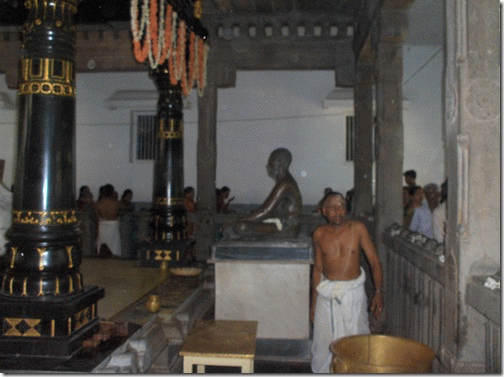
Bubba really enjoyed that ashram. All the people there were acknowledging Him with great respect. Some bowed. Others always acknowledged Him with a pranama as he passed. One day Bubba wanted to see some photographs of Ramana, so we sat with one of the staff and looked at various photographs and books they had in their library. While we were there the gnats came and got in Bubba’s face. I got a hand fan and fanned them away, at the same time it was cooling to Bubba. I really enjoyed this archetypal way of serving my Guru.
Since it is the custom to walk around holy places, one morning Bubba told me we would walk around Arunachala hill. Only once, though, as this walk was eight miles long. He told me to take the camera bag. I lightened the bag as much as possible for my comfort, and we were off. The walk was pleasant and we saw the holy hill from all sides. Halfway around the hill was a famous old temple called Annamalaiyar Temple. We entered and Bubba asked me to take some pictures inside. I told Him that I couldn’t, because I had left the flash equipment at the Ashram. He said, “Who told you to do that?”
I said, “I didn’t think I’d need it.” He said, “Don’t think.” He said, “Whenever a person uses only his mind to decide on something he always tends to make the wrong decision”. This was true for me. Throughout the trip whenever I would decide something on my own, it eventually turned out to be wrong. Bubba said, “You have to begin to doubt your mind and live from the point of view of intuition”.
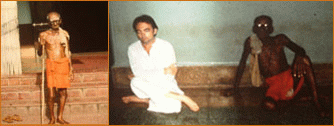
Bubba would sit in the Samadhi Hall where an old, sadhu was moved to come near him. He followed Bubba into the Hall and sat as close as he could without intruding. I noticed this, but did not feel anything inappropriate about it. The man was very humble, very quiet, and almost not noticeable.
Since it is the custom to walk around holy places, one morning Bubba told me we would walk around Arunachala hill. Only once, though, as this walk was eight miles long. He told me to take the camera bag. I lightened the bag as much as possible for my comfort, and we were off. The walk was pleasant and we saw the holy hill from all sides. Halfway around the hill was a famous old temple. We entered and Bubba asked me to take some pictures inside. I told him that I couldn’t because I had left the flash equipment at the Ashram. He said, “Who told you to do that?”
I said, “I didn’t think I’d need it.” He said, “Don’t think.” He said that whenever a person uses only his mind to decide on something he always tends to make the wrong decision. This was true for me. Throughout the trip whenever I would decide something on my own, it eventually turned out to be wrong. Bubba said you have to begin to doubt your mind and live from the point of view of intuition.
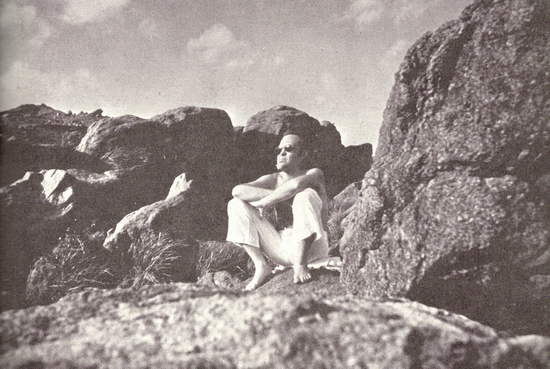
Each night Bubba loved to climb a little way up Arunachala hill before sundown and sit on the rocks where He could do His work of Blessing everything. It was a very beautiful place overlooking the Ashram and some local villages. Those times on Arunachala hill were particularly enjoyable to me, for the intensity of the day’s activities had slowed down and I could sit silently enjoying being with my Guru Bubba Free John. During those time Bubba was showing me something deep of His love.
Bubba said Ramana Maharshi was a Sage, the third type of teacher, along with Yogis and Saints. He said Ramana’s work was the purification toward the Heart, the Self, but that he had, in fact, transcended even that limitation, His force could be felt in the chest to the right. Ramana lived as the True Self to his devotees,
We stayed at Ramanasramam for three days. Then went to Sri Aurobindo’s Ashram and Auroville.

Franklin didn’t feel much was happening at Aurobindo Ashram other than the devotion by devotees placing flower arrangements on Sri Aurobindo’s shine. Sri Aurobindo had died some years before, and the Mother was now near her passing. We didn’t have a chance to meet either of them.
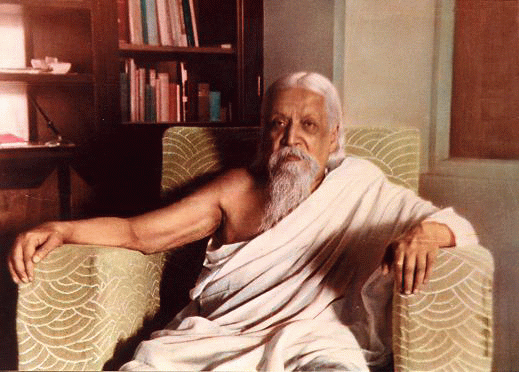
A representative of the Ashram spent two days with us showing us around. He loved to talk about his Guru work. He was so full of Sri Aurobindo’s quotes. He took us to Auroville and expounded on the principle of that futuristic self-sustaining community. To enter it, a person gives all he has and in time is given all he may need. Bubba said the principle is right as long as the reason to be there is God Realization and not political or anything else.
Our guide kept telling us what the Mother has said and what Sri Aurobindo has said, but it seemed he had nothing to say for himself. The last day of our trip the man came to our hotel to give his respects and say good-bye. He joined us for breakfast but didn’t stay, because when he began to quote his Gurus, Bubba talked about the difference between repeating what someone else has said and not feeling what you have to say from your practice. He said that’s about seeking and not living the God Realizing Way. Bubba said there is no genuine relationship to God in a community if it is based seeking. At the first chance our friend and guide made his apologies and told us he had to run. Bubba’s comments could have served him, but I don’t think he got it.
We left for Madras and visited St. Thomas’ Samadhi on the way. Bubba said it was a pure place, but had no real force. After visiting a few other temples, we headed to Calcutta.
One day, after seeing some temples and returning to our room, I wanted to work on my camera equipment and needed to open a metal container. It wouldn’t open by hand and I was getting frustrated, so I banged it against the floor both to open it and to get back at it. Bubba was standing nearby, and as I did that He kicked me in the ass very hard. I turned fast and without thinking I said, “What did you do that for?” Then I immediately realized I was out of line and swallowed a few times. He said I must deal with karma as it arises. I shouldn’t let it accumulate. His hard kick was the resolve-response to my disturbance, and the karma was purified.
To be constantly in Bubba’s presence for many weeks was an enormously intense experience. If I hadn’t kept surrendering and turning in relationship, I couldn’t have withstood it. The pressure of His free presence was constant. He gave me no room for mediocrity. He expected me to function without hesitation at all times. He constantly showed me when I was wrong and made me think I was wrong when I was right. He was always making me see my assumption of dilemma and turning me to self-understand.
One day when we returned from a long trip I wanted to immediately clean my camera equipment. As I was laying it out Bubba asked me for a foot massage. As I massaged His feet my attention kept turning to the camera equipment. I’d consider what I needed for the next day etc. With split attention the massage lasted what seemed to be hours. Then at some point when I noticed my lack of full attention to massaging my Guru’s feet and legs I finally gave Him that full attention. As soon as I did that Bubba said, “That’s enough” and the massage ended.
He said I must go beyond my preferences, that I always function along with my preferences, but He demanded sacrifice of my point of view and complete attention and service to Him. When I did that, I felt the freedom of no self-sense, and the devotional relationship simply lived and deeply enjoyed.
In Calcutta we visited Ramakrishna’s temple.
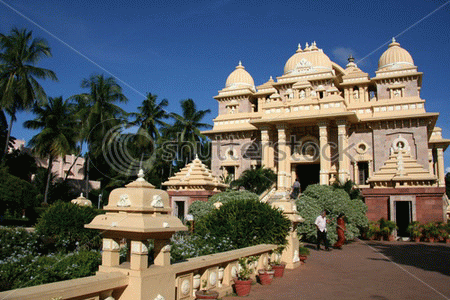
As soon as we arrived Franklin want directly to a special room on the temple grounds. It was a small room with enough space for two beds and some floor for people to sit when visiting and worshiping Ramakrishna. One of the beds was for Ramakrishna and the other was for his devotee Sarada Devi. The bedding indicated they slept head to toe.
Bubba bowed and sat on the floor in front of Ramakrishna’s bed. I moved to the rear of the room, because I intended to take a photo. Several other people entered the room and sat on the floor in front of me. Before entering Bubba said since this is where Ramakrishna slept it was important that I take a good photo. In many temples throughout India pictures were not allowed. This was one of them with a sign at the entrance door, NO PHOTOS ALLOWED. And an attendant by the door with a large stick. But even before seeing the no photos sign, my Guru said He wanted a photo. I understood the importance of His relationship with Ramakrishna, so once seated I set up the camera, then waited until all present had closed their eyes in meditation. When it seemed least disturbing to others stood up and very quickly pointed the camera, then coughed to cover the sound of the shutter and flash noises. I wanted to be sure the camera noise was covered by the cough. As soon as I sat down I immediately questions if the camera was pointed correctly. So I did it again and believe it or not I still wasn’t sure so I did it one more. Each time I coughed it did disturb others in the room, but no one knew I was taking pictures. I guess the three flashes from the camera may have been felt to be spiritual experiences or something. But no one complained. Once we left the room Bubba asked what was all that coughing about? I said I was taking photos. He didn’t comment.
Bubba was constantly putting me in circumstances that required me to deal with people throughout the trip. I would make plane and hotel reservations and handle just about all the practical needs on the trip. Occasionally someone would tell me that the reservations were not available, or there was some other impossible problem. Bubba would never allow me to accept that. I had to find a way to get the person, or the circumstance to change and resolve the limitations, and some limitations had miles of complicated local regulations. I really didn’t want to do this, so naturally I was required to do it. I saw how ordinary circumstances could create a dilemma, and Bubba was always right there expecting me to function through the dilemma. He explained the only way to function in dilemma is to understand that the dilemma is caused by the reaction to something. Understanding that the reaction is self-caused and is self-meditating. Therefore it is not in relationship, so stop giving it energy and instead turn to relationship. When I did that the dilemma was forgotten and no longer a problem. He always called me to the sadhana of living in relationship and stop avoiding relationship by self-meditation.
We visited to the Kali temple for a short time before visiting the Ramakrishna-Vivekananda Mission. We also went Belur Nath where some of Ramakrishna’s close devotees were buried
Bubba said Ramakrishna’s room was a good place. He told me that Ramakrishna’s realization was that of a Saint, and his qualities were bhakti and devotion, but he had transcended a Saint’s limitations. His force could be felt in the head or sahasrar. Ramakrishna lived as a devotee of God to his own devotees…
After leaving Ramakrishna’s temples and ashram, Bubba said His work was over and the rest of the trip would be for pleasure.
Throughout the trip Bubba would always touch the shrine and stand or sit quietly while clearly serving to purify and enliven the spiritual energy in each place. He said the reason a temple can be felt to be spiritually alive is not only because a Saint or Holy person once served it, but because Saints and holy person continue to come and keep awakening spiritual energy.
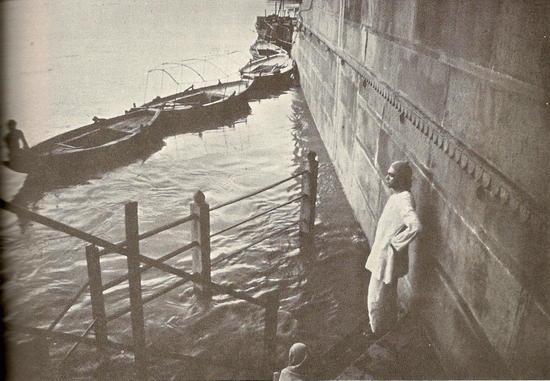
We continued from Ramakrishna’s Ashram in Calcutta to Benares. Upon arriving we hired two coolies to take us in carriages to the Benares house of the Raja of Bhor, The Raja had offered the accommodations to Bubba while we visited him in Poona. Bubba’s carriage went first and mine followed. I really enjoyed seeing His head bobbing up and down above the back of His bouncing carriage. He kept looking back and laughing. At one time my carriage pulled up next to His. He gave me a sly look as if leaning out a car window and said, “Pretty good-lookin buggy. You wanna drag?” I picked up my hand as if holding a stick to whip my coolie and said, “Let’s go!” We both laughed freely as we raced down the road.
A small boy about thirteen or fourteen approached me and asked where we were from. He welcomed us to his town and offered to show us around. I didn’t know our plans, so I said, no thanks. The boy disappeared. After a few turns my coolie lost sight of Bubba’s. The streets were crowded, it was no place to be lost. The boy appeared again and said, “Your friend went that way.” I found Bubba and felt comfortable again. At the end of our ride the two drivers didn’t know where the Raja of Bhor’s house was. The boy appeared again and brought us to the house. Bubba told the boy to meet us the next morning before sunrise. He could show us around by first bringing us to the Ganges. The boy was pleased.
That night we stayed in a one-room stone building. There were two mattresses on the floor and a couple of pillows in a corner. There was no shower, but we could wash with a bucket of water. The day had been very hot, so at the first opportunity Bubba washed. He laughed and said, “The two best things in the world are Darshan and washin”!
The next morning the boy came and we walked down the winding alleys to the edge of the Ganges. On our way we passed a small temple. There was practically no way of telling it was a temple, because its walls looked like every other wall on the winding path. Bubba stopped for a moment and said, “This is a good place.” Then we continued our walk. Later He said that the temple was the best and probably the only truly spiritual place in Benares.
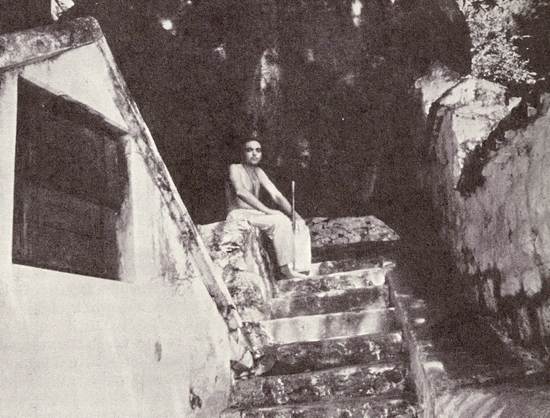
We visited a couple famous temples, the Golden Temple (with a dome of gold) and the “Monkey Temple.” The boy then took us to his uncle’s and his sitar teacher’s homes, where Bubba enjoyed seeing some antique paintings, Thankas, sacred jewelry and fabric.
We spent three days in Benares and the boy showed us around every day. He said he just wanted to show us around and was totally unconcerned about money. Then at the end of the day he said, “Could you give me some money for my day?” I gave him something, I forget how much. He said, “Tomorrow I’ll show you around, and you shouldn’t give me any more money, you’ve given me enough.” The next day he said, “I don’t want any money, but maybe you’ll give me something of your personal possessions by which I can remember you.” He has learned well how to survive in Benares, India. Anything we had from America was worth much more than any rupees I would have given him. When I told Bubba what the boy asked for Bubba said, “Give him a handshake and thank him.” He wasn’t interested in playing along with the boy’s strategies. He wanted to boy to feel the service he did was how to honor a holy person. Bubba gave him something to deal with, as the Guru always does.
That evening was unbelievably hot. I slept off and on, but Bubba didn’t sleep at all. He said it was the most uncomfortable night of His life. He felt that His skin was turning inside out. The mosquitoes didn’t help. He said He could barely breathe. But as He was telling me this, He was laughing. He was always free to enjoy everything, even His own suffering. I asked if He did anything to ease the discomfort? He said, Since it seemed His skin pours were closing, He just opened them up.
One day Bubba said, “Jerry, when are you going to take spiritual life seriously?” I said that I thought I had. He said I hadn’t begun to get straight. I didn’t understand at the time, but I knew He was always showing me and testing me and turning me to understanding. Another time at dinner He said I was completely full of shit, that I thought I wanted spiritual life and was serving the Guru and all that good stuff, but that I absolutely didn’t want spiritual life. I didn’t want to do sadhana, and I didn’t really want to serve my Guru. This really felt terrible. I was destroyed. Then by His Grace, a bit later I understood the ego, the separate self-sense, absolutely doesn’t want anything to do with the entire spiritual process. All it really wants is to be consoled and stay self-conscious.
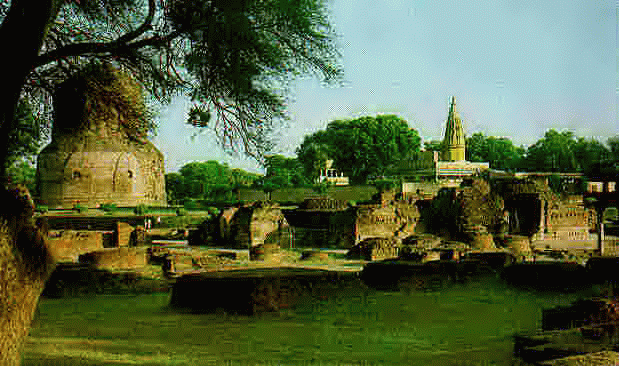
The next day we left for Sarnath where Gautama Buddha had taught and lived. We visited the stupas” where he met his disciples and gave his first sermon. We saw the famous “Deer Park,” a temple and shrine, and a Bodhi tree which supposedly was grown from a cutting of the original tree at the site of Gautama’s realization. On the grounds were ruins of the buildings where his monks used to live many years ago. There was a large piece of a cylindrical stone that was saved from one of the original temples, the carved markings on it that were not of any common language. When Bubba saw the markings, He said that earlier in His life He was spontaneously moved to write in an alphabet that He had never seen nor previously known. These markings were of that same alphabet. Bubba laughed and raised His eyebrows and said, “Could it be?” leaving the obvious to my consideration. We visited a museum of Buddhist statues and paintings, where the first statue ever made of Gautama was on display. Bubba considered another one there the best image of the Buddha He had ever seen.
From Sarnath we traveled to Kathmandu in Nepal. We kept moving from one place to the next. Early in the trip Franklin said I must sleep consciously. When I awoke up in the morning there was no time to waste regaining consciousness. There was only time “to brush tooth and run.” I never learned how to sleep consciously, but I did learn to wake and run. He said I should always be a few steps in front of Him when walking out the door. No resistance, just do it.
We arrived in Kathmandu on a festival day, and all the ladies were dressed in their best saris. Bubba was impressed with how beautiful they all were.
We spent the day traveling from one temple to another. The primary spiritual tradition in Nepal is Tibetan Buddhism. I said to Bubba that with all the seeking that was going on throughout India and Nepal, He was in a very dangerous position, because He was the living proof of the ineffectiveness of all seeking. He was the proof of no-seeking and could get killed for it. He agreed and said that people are trying to kill him all the time, because He is an enormous threat to all seeking and security. Then He laughed.
The following morning we rose early and hired a taxi to take us to a hill where we could look over the Himalayas and, until the clouds set in, we would be able to see Mount Everest. On the way the cab had a flat tire. Bubba walked up the road and around a bend. Shortly another car came by and stopped to help. It was slightly before daybreak on this hilly road heading into the mountains. After a few minutes Bubba reappeared walking down the road toward us. He was wearing white as He did throughout the trip to repel the hot sun. A woman from the other car exclaimed, “Look! He looks just like a Guru coming out of the Himalayas!” She was all excited. I said, “You’re right” and laughed.
The driver took us to a special hill and directed us to climb to the top. We did, and from the summit we had a panoramic view of the fantastic countryside. The sun was rising and Bubba looked very beautiful.
We never saw Mount Everest, at least not very clearly, because the clouds came in too early for it to become visible. But seeing Bubba sitting on the grass, blessing the world and all beings from that hill top was the greatest vision of all.
Soon a Nepalese peasant come to the hill top and began playing a one strings instrument like a violin, then began to sing. His music and soft singing felt a perfect way of greeting the rising sun. I am sure it was Bubba’s radiant Presence that made everything on that hill feel perfect.
Soon a couple from France arrived. They stayed enjoying the scenery and the music. Before they left they asked the musician if they could purchase his musical instrument as a tangible remembrance of their trip to Nepal and this hill top. He said no, but they persisted and kept offering more money. Eventually he sold it to them. They left hugging and preciously holding the instrument. As soon as they drove away the Nepalese peasant took another one string violin type instrument from his bag and began playing and singing again. He was a violin salesman with a great gimmick.
When I told Bubba about this, He just laughed.
Originally we had planned to stay in Nepal for a few days, but when we returned to our hotel room later that morning, Bubba said, “Now, here’s my plan….” We left within a short time and caught a flight out of Nepal. Bubba said that Nepal was beautiful and the temples were impressive, but true spirituality was missing. He said there was no need for us to stay. It was obvious that He did His Blessing work to all of Nepal on that hill top. His comment reminded me that wherever we went in India and now Nepal He was working to intensify and purify and empower the living Spiritual presence at each place so it would stay alive. He wasn’t going anywhere to get anything. He was only going everywhere to Give and serve everything.
We headed for Agra and the Taj Mahal. Bubba was still working with me as intensely as ever. He said that tapas, or spiritual fire, is caused by the friction of the internal resistance to relationship. He said that His intensity is part of His gift. If a person keeps resisting, eventually he will have to leave. The intensity will become too much for him to bear. On the other hand, if a person surrenders to the Guru, he will be shown the Divine. Mediocrity, which is everyone’s strategy in life, only breeds mediocrity. It’s all inappropriate in the face of God and is unacceptable to God. He said that resistance and mediocrity must be seen and understood from the point of view of Truth.
The Taj Mahal deserves its reputation as one of the true wonders of the world. Bubba said that He considered it one of the most beautiful buildings in the world. While it is built of pure marble and is impressive in size, yet it shows no weight. Its overall lines and balance are free of any heaviness. The detailed inlaid stone were outstanding and the corridors, built only for visual effect and leading nowhere, completed the perfection. We only visited for a short time, but enough for Bubba to do His work of Blessing even in this public monument.
We returned to New Delhi and stayed for a couple of days visiting some museums and temples, then we went to the airport to leave India. Once, at the airport Bubba pointed to a Boeing 747 airplane. He said, “Look at this great big expensive airplane. For what it took to build this airplane, the entire peasant population of Bombay could be fed for a year.
Soon we boarded that 747 headed for New York and a connection to Los Angeles. As soon as I stepped onto the first plane, I began to feel sick. I became exhausted and just needed to sleep. I did, and slept in every position imaginable in the less than comfortable airplane economy seat. I slept for some twenty hours. I couldn’t eat and only woke up to change my position. Bubba felt fine throughout the flights, but did say I could at least have been company for Him instead of becoming unconscious for so long.
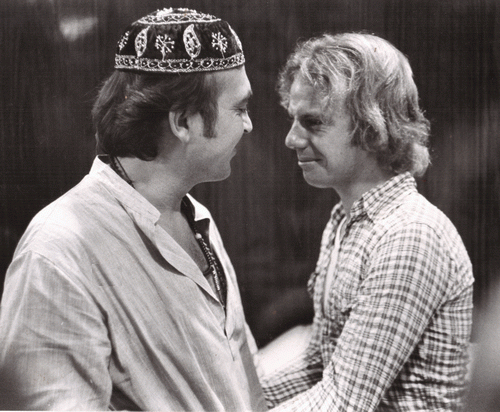
Bubba and Tom Riley on arrival
When we arrived in Los Angeles, all the devotees from the Ashram was there to greet Bubba. It was definitely the most moving experience of the trip. When His devotees were around Him, full of their love for Him, Bubba freely radiated His perfectly Enlightened State. As He walked down the ramp to greet everyone, He shone like a million suns. The love of all those people for Him made me cry with joy.
Throughout this entire trip, the great Divine Guru, first named Franklin Jones, then named Bubba Free John showed me two most important things: to gain self-understanding, and to turn my feeling attention to Him in devotional Love. All He ever did was live as the Heart of Divine Love and be the Divine Light to all.
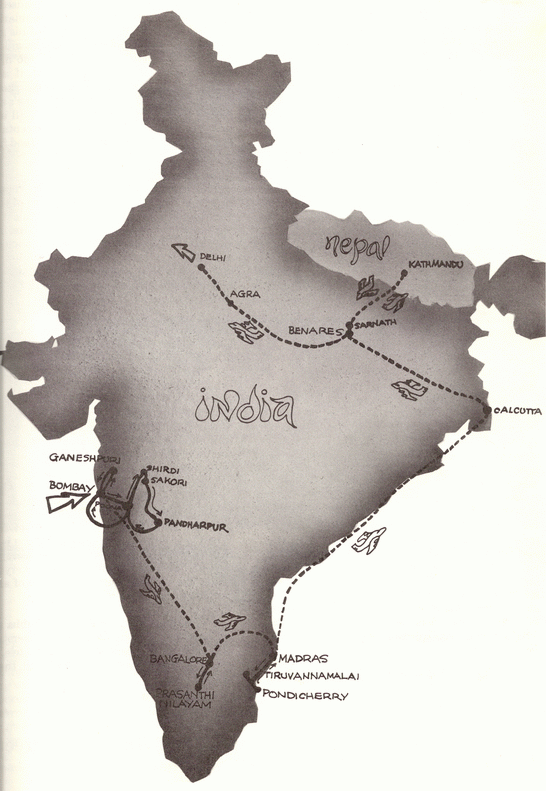
Map of Trip
Also see:
The following is an excerpt from a talk Bubba gave to his devotees in Los Angeles on Prasad Day, April 8, 1973, several months before he departed on his pilgrimage to India.
More on the India trip:
A series of transcripts from tapes Bubba made on a portable recorder operated by Jerry Sheinfeld, who was traveling with Bubba and serving him.
Early devotees response to the posting of this article