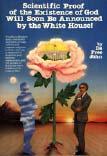
Foreword by Ken Wilber in Scientific Proof of the Existence of God Will Soon Be Announced by the White House!, by Da Free John (Ruchira Avatar Adi Da Samraj).
Knowledge is not democratic; creativity is not egalitarian. I realize that sounds contrary, but consider: When we want original, concise, and brilliant insights into any field of knowledge, we almost always go to the acknowledged masters of that field. In physics, we look to Newton, then to Einstein, then Heisenberg and Schroedinger and Wigner and Bohm. In biology, we go to Lamarck and Darwin and Wallace, then Morgan and Muller and Watson and Crick. In psychology, to Freud and Adler and Jung and James and Piaget. And why not? Genius is genius, and the more the better.
Although that is what we do in fact consult the geniuses I sometimes think we all like to imagine, on the contrary, that enduring knowledge is discoverable by all and sundry, that insight is democratic, that you and I could produce the same truths given the right opportunities. That is probably not the case, however, and the practical fact is that humanity has always relied on, and looked to, Heroes, real Heroes, men and women of great genius, men and women who happen, for one reason or another, to be able to see more, understand more, create more, and know more, than you and I can at our present level of evolution, or adaptation.
People are always the philosophers of their own levels of adaptation, and how can we deny it? some are more adapted to, and grounded in, the Reality of Truth itself, whatever the particular field of knowledge through which that Reality might express itself. And those individuals, so grounded, have simply been in fact the Heroes of times past and present. They were and are the Heroes of the True, or the Good, or the Beautiful and ultimately they are all simply the servants of our own evolution.
This does not mean that these Heroes the Einsteins and Darwins and Freuds and Nagarjunas have a higher status than you and I, because all people are equal in the eyes of Divine Mystery. But it would be fair to say that they do serve a higher function: seeing and communicating those truths that you and I cannot or have not yet seen and understood, truths that are to you and me only potentials. And, I will soon argue, Da Free John is a Hero a quite extraordinary Hero at that.
Yet, in America (as well as the world at large, I think), we have an awkward stance towards Heroes. I mean real Heroes actual geniuses, men and women of truly brilliant understanding. It is as if we all wished to deny that real Heroes could be among us, since I suspect we all hold out the dream that we, that you and I, could and should be our own Heroes. To acknowledge a real Hero seems to deny our own worth, and so we are terribly suspicious and sometimes downright antagonistic towards any who might rise up, in these democratic and egalitarian times, as a real Hero. Let our “heroes” be movie stars, let them be astronauts looking for rocks on dead moons, let them be tacky politicians but real Heroes? real above the crowd geniuses? Why, we seem to say, they exist only in the past, far away from our own hoped for heroics.
And especially religious Heroes, Spiritual Masters, true Adepts in the Divine Mystery let them abound, we seem to say… but only in the past, only yesterday. I cannot be the only one who marvels at the fact that some forty million Americans accept, as absolute truth, that miracles were performed in the past, that someone way back when walked on water, healed the sick by touch, turned water into wine and fish into feast, raised the dead, and healed the lame. Yet none of those Americans would accept any of that if it happened now, here, today. Oh, we all would like to think that we could recognize one such as Christ if he returned. But the sad historical fact is just the opposite: We you and I have from the start rejected our true spiritual Heroes when they walked among us, and, if history is any guide, we would probably do the same thing today. It seems that, while they are alive, real Spiritual Masters are met with benign neglect (or worse). The fact is that Christ (or Buddha or Moses) might already have returned and been summarily rejected. What evidence could we offer otherwise, given our past performances?
I do not want to sound moralizing or condescending about this I am in no position to do so. It is just that the issue of real Spiritual Masters is so complicated, so touchy, so sensitive, so complex and I only want to set the problem in the strongest possible terms so as to point out what is involved. We seem to have mixed emotions about Heroes in any field, but we become almost hysterical in our reactions to spiritual Heroes. The point is this: All true spiritual Heroes are, while alive, by and large rejected, shunned, denied, or worse (consider the horrendous fates of Giordano Bruno, al-Hallaj, Christ, Eckhart). But while all true spiritual Heroes are initially shunned, not all those shunned are true spiritual Heroes. And we you and I will simply have to try to decide who is a Divinely empowered Master, and who is a fraud, or, at best, whose realization is incomplete.
This problem has today reached a critical point with the events of Jonestown and the growth of so many apparently strange cults. The world at large now looks with even more terrified suspicion upon any movement that appears “cultic that is, any group, large or small, centered around a heroic” or ‘charismatic” leader.
“Cult” is the new anathema; cult is the new terror. But here again we face the same dilemma: All truthful and beneficial causes are initially “cultic,” but not all cults are either truthful or beneficial. Examine any major historical phenomenon, and you will find it is cultic: headed by a Hero surrounded by devotees. This is not necessarily bad. How could the American Revolution have survived Valley Forge without the hero-figure of George Washington and his cultic followers? Where would modern psychiatry be without Freud and his slavishly cultic disciples? Or on the religious side: Christ and his cult of disciples, Buddha and his cult of monks, Krishna and his cult of devotees. Could we seriously wish that none of those cults ever existed?
Politics is cultic; religion is cultic; philosophy is cultic; even science is cultic and cults, in the broadest sense, simply represent groups of those who acknowledge and try to follow in the steps of the Heroes of a particular field of endeavor. But, as I said and it is worth repeating one last time while all truth is initially cultic, not all cults are truthful. We in the West have a long list of cults and their Heroes that we generally think are harmful: Stalin, Hitler, Mussolini, and, closer to home, many of the new “cultic religions” that enslave rather than enlighten. But please notice: What makes these movements deplorable is not the fact that they are “cults” nor the fact that they have “heroes,” but the fact that they are based on ideas or principles that reasonable men and women would eventually agree are erroneous or immoral or even heinous. But whatever you think about moral or immoral heroes, can you start to see how extremely tricky is the problem of followers, of truth, of heroes, of cults?
And so: Da Free John is a Hero and Da Free John is surrounded by devotees. What, then, are we to make of this spiritual Hero? Realize that we cannot reject him simply because he is viewed as a Hero. And realize that we cannot reject him simply because he has dedicated followers. Rather, we must look to his teaching, look to his life, look to his example, look to his message. We would not deny such “due process” even to a common criminal, so let us not deprive our potential Heroes of at least equal courtesy.
What, then, do we find? Let me offer a personal opinion. I have put forward four or five books and some thirty odd articles devoted to a synthesis of Eastern and Western religion and psychology. Freud and Jung and Adler, Piaget and James and Sartre, Hinduism and Buddhism and Taoism, Christianity and Islam and Zen I have spent my life studying these systems, profoundly sympathetic with their concerns, sincerely interested in their insights. I myself am no hero, but I honestly think that, by now, I can at least recognize real genius when it comes my way.
And my opinion is that we have, in the person of Da Free John, a Spiritual Master and religious genius of the ultimate degree. I assure you I do not mean that lightly. I am not tossing out high-powered phrases to “hype” the works of Da Free John. I am simply offering to you my own considered opinion: Da Free John’s teaching is, I believe, unsurpassed by that of any other spiritual Hero, of any period, of any place, of any time, of any persuasion.
I would hope that I would not make such a bold-faced statement without being able to support it. And so, consider: If you survey carefully the world’s great and enduring religions, you tend to understand that, taken as a whole, the great spiritual paths announce four or five major themes. Islam is based on the truth of only-God; Christianity, on the truth of only-Love; Buddhism is based on the truth of no-self and no-seeking; Judaism, on the truth of the Divine as formless and imageless Creative Power and Mystery; Hinduism, on the truth of formless absorption in the unmanifest; Christian mysticism centers on the descent or reception of the “Holy Spirit”; and Taoism grounds itself in “Eternal Flux.
From a slightly different angle, the great world religions can be divided into three major classes. The first is the “path of yogis” the path of hatha and kundalini yoga, which deals with all the “energies” leading up to the highest centers in the core of the brain. The second is the “path of saints” the path of subtle halos of light and sound secreted within and beyond the higher brain centers, the path of realizations apparently beyond gross mortality. The third is the “path of sages” the path of formless absorption and meditation in the causal realms of consciousness itself, the realms of only-God, beyond manifestation and beyond any form of the subject-object dualism.
And here is my point: The teaching of Da Free John includes, even down to the minutest of details, every one of those five major themes and every step of those three major paths. I personally have found that not one significant item of any of the great religions is left out of Da Free John’s teachings. Not one. And it is not just that these points are all included in his teaching: They are discussed by Da Free John with such brilliance that one can only conclude that he understands them better than their originators.
One cannot help but reflect on why Da Free John’s teaching is so balanced and basically complete. I think one of the reasons is that Da Free John himself has tested, and passed through, all of the major paths as we discussed briefly above. Although born natively predisposed as the Ultimate Transcendental Consciousness, he himself underwent years of discipline in and re-adaptation to perfect Ecstasy in God, an evolutionary discipline that, because of its completeness, seems destined to be revolutionary as well. He spent years in the disciplines of the “path of the yogis,” under the acknowledged teacher known as Rudi (Albert Rudolph or Swami Rudrananda). He spent years in the “path of the saints,” meeting and then surpassing the well-known Master of the subtle realm named Swami Muktananda. Beyond those stages, he “met,” “saw,” absolutely acknowledged, and gracefully bowed to such transcendentally awakened saints and sages as Swami Nityananda and Sri Ramana Maharshi. At the summit of those paths, he seemed then to stand complete, possessed of a teaching and pointing a way that included and transcended all through which he has himself passed.’
Perhaps you will disagree with my interpretation of Da Free John’s life. But I think you would at least have to agree that his intellectual brilliance and moral fortitude mark him as a true Hero a beneficent hero, a good hero. Disagree with him if you want; fail to be moved by him if you choose but please do not toss him off as a “weird cult hero.” Besides, Da Free John himself has spoken out so often against “cultic hero worship” that it would be very odd to overlook his own thoughts on the matter.
From the start, in fact, cultic hero worship is precisely what Da Free John has tried to expose and argue against. And he was doing this years before the present-day national hysteria about “cults” and “hero frauds.” And he has spoken out not just against the cults of so-called spiritual masters, but against cultic allegiance in any ultimate form: scientific, political, religious. Six years ago, as but one example, he was already explaining that “the cult of this world is based on the principle of Narcissus, of separated and separative existence, and the search for changes of state, for happiness. All of the cultic ways are strategic searches to satisfy individuals by providing them with various kinds of fulfillment, or inner harmony, or vision, or blissfulness, or salvation, or liberation, or whatever. But the truth is that there is no such one to be fulfilled. Therefore, it is the fundamental responsibility of all to continually undo the practice of the cult. Such a cultic existence has no fundamental value at all. Not only hasn’t it any value, it is an absolutely negative influence in the life of persons.
Da Free John acknowledges that certain (truthful) cults have an intermediate function as we said, all truths tend initially to be cultic/heroic, so why press it? However, as Da Free John puts it, “The negative tendency in cultism is the tendency to forget that mere enthusiastic association with an object, an idea [whether of a new scientific discovery or of an evangelical revival], a person [a hero figure] or whatever, is basically a superficial or ‘beginner’s’ state of mind. All mere enthusiasm, or belief, or ritualized consciousness is at the novice level of human existence, and if it persists beyond its appropriate term [emphasis added], it becomes an expression of either childish or adolescent neurosis.” Such has been Da Free John’s stance from the start, and such remains his stance today. In this book he states unequivocally and probably for the thousandth time I don’t believe there is stupidity, delusion, and casual ill-will manifested anywhere more than in the domains of religion and spiritual cultism.”
Ah, we may say, Da Free John speaks against other cults from science to religion but what about his own? Does he not encourage his own cult of Heroism? Does he not also ask and claim followers? Is he not himself the perfect example of the new cult Hero?
Those are harsh questions, but I think they are ultimately fair, and so deserve a fair answer. First of all, Da Free John, like any genius, is and will forever be surrounded by a group of followers. There is no way to avoid that, and no reason to any more than we would want to prevent Jung and Adler and Rank and Jones from gravitating towards Freud. Eventually, Freud was wildly praised by Jones and wildly denounced by Rank so what? When we judge Freud, let us look to Freud, and not hold him responsible for the vicissitudes, often irrational, of his followers.
But more importantly, we have the whole example and teaching of Da Free John himself to those who would be his followers. And nowhere is he more critical of the “cultic” attitude than he is towards those who surround him. This is a short foreword, and so I will not inundate you with supporting quotes. But make no mistake about this affair: I have never heard Da Free John criticize anyone as forcefully as he does those who would approach him chronically from the childish stance of trying to win the favor of the “cultic hero.” Look to his writings, and you will find the constantly repeated argument that those who see him as a personal, cultic hero do not see him at all, but are merely involved in narcissistic self-love and “movie star” fantasy-hallucinations about their relationship to him. I have seen no other Spiritual Master take that anti-cultic stance from the start so consistently, so forcefully. Fortunately, I do not need to document that point Da Free John’s writings are in print, dated from the start, and thus what he has been saying for the last seven years can only be taken more seriously not less seriously in light of the recent “cult disasters” and belated national panic about “cults” in general and “hero-frauds” in particular.
The last thing I would say is this: Perhaps your approach to Da Free John will not be that of a pure devotee; perhaps it will not even be that of a helpful “friend” of his work. But it is becoming quite obvious that no one in the fields of psychology, religion, philosophy, or sociology can afford not to be at least a student of Da Free John. At least confront the teaching; at least study what he has to say; at least consider his argument. Since he is indeed a true Hero an authentic and supremely enlightened Spiritual Master please make use of him while he is alive, while he can serve you in direct, living relationship. Do not repeat the past mistake of denying such a Spiritual Master while he walks among us. Do not meet him with benign neglect. Do not wait until decades or centuries after his death to acknowledge what he is. As a simple start, study his written teaching. And I think that if you will work carefully through even one of Da Free John’s books, you will find you have been taken apart and put back together again in a form that will be only Mystery to you, only Release in God, only Radiance in the Divine, and only Joy in the obviousness of it all.
Return to Ken Wilber on the Beezone
==========
The Laughing Man Magazine