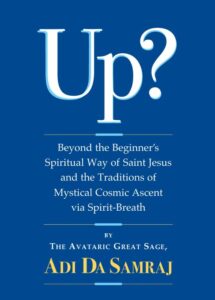
The Dogmas of Social Morality Versus the Esoteric
Spiritual Teaching That Is At the Origin of Traditional
Religions 4. In Jesus teaching, the Divine Law is stated in
contrast to the merely social (and political) laws. It is
not a new social law that Jesus of Galilee is teaching, but
the Law, the Divine Law. He is recommending not the law of
love as opposed to the Mosaic law, but the Law of
Spirit-birth. Traditional Spirituality, even in its esoteric forms, is
often oriented to the way of works (or right actions),
because works can include not only social works but also
works that are performed in private and that produce results
which could be regarded to be positive from a conventionally
Spiritual point of view. Mysticism, for
instance, depends upon such action. In the Hindu tradition,
for example, forms of Yoga (such as Karma Yoga, Bhakti Yoga,
Raja Yoga, Kundalini Yoga, and Jnana Yoga) are traditionally
conceived in these same conventional termsas actions
that produce results. Thus, since the most ancient days, all
over the world, there has existed this tradition of action,
the way of works, the way of action as a kind of magical
activity. In the traditions of the way of works, action is
conceived as something that always produces
resultsand, therefore, it is recommended that one
perform only those actions that produce good
results. In contrast to the exoteric way (or magical
method) of works (or causative action), however,
stands the esoteric way that has been indicated and pointed
to by all the great Spiritual Adepts. The great Spiritual
Adepts are traditionally associated with all kinds of lore
about their origin, and many models of the universe were
reflected in the stories of how a great Spiritual Adept
appears and how he or she relates to the Divine Condition of
Reality. Structures of the universewith much
aboveness and belowness and
middleness and planeshave
always been part of the esoteric traditions. The great
Spiritual Adepts are typically presumed to have come
down from the highest point in the scale of things
into this lower plane, to bring the esoteric
teaching down from on high, and, thus, into the middle and
lower worlds. Whatever the model of the universe in the context of
which any Spiritual Adept is conceived to arise in the human
plane, the teaching of the great Spiritual Adepts (whether
historical or legendary) always speaks in contrast to the
conventional wisdom (or popular culture), and
(therefore) in contrast to the way of social morality for
its own sake, or the conventional way (or magical method) of
action-leading-to-results. Jesus of Galilee taught people about the all-embracing
principle of love as the right and essential motivation
behind all social lawsyet, ultimately (and more or
less in secret), he was teaching people about the Spiritual
Kingdom, or Freedom through Spiritual
Realization of the Divine Condition (or Spirit-Breath) of
Reality. The teaching of the New Testament could
be summarized as: Repent from sin.
That is to say, understand and renounce all forms of
self-enacted separation from the Divine Condition of Reality
and be established in the Kingdom of God, or the
Divine Source-Condition That Is the Spiritual Divine.
Renounce sinful (or ego-bound and ego-binding)
actions, let all actions be performed in surrender to the
Divine Condition of Reality, and (thus) fulfill the Law of
Inherence in the Spiritual Divine. Religious law is conventionally (or exoterically)
conceived in terms of various rules and conventions of
social morality. Thus, the New Testament
teaching has been interpreted and reduced to mean
Repentor be sorry for, and turn fromyour
illegal and inappropriate social
behaviors! On a more profound level, the New
Testament summarizes all forms of social morality via
the primary law of love (or non-exclusiveness). Thus, the
teaching of the New Testament has also been
interpreted to say Repent of all acts that are not
based on love, and perform all kinds of acts of love, or
self-sacrificial, social, and relational action. In the religious fictions of the New
Testament Gospels, Jesus of Galilee is made to preach
about the laws of social behavior, and he is critical, even
angrily critical, of the tradition of laws that were extant
in his timesystems of behavior that were so complex
that an ordinary person could not help but regard himself or
herself to be a sinner. In the New
Testament Gospels, Jesus frequently criticizes the
pharisees, who (along with all the other
religious officials of the time of Jesus) made
the laws (or behavioral principles) whereby one might enter
the socially objectified Kingdom of God, and who
(the text supposes) made the laws so complicated that
neither the pharisees themselves nor the people they taught
could ever enter the Kingdom. Jesus was very
much involved, apparently, in criticizing this
over-complicated, fleshy conception, this
non-Spiritual conception, of the laws. Jesus of Galilee summarized his idea of the moral law of
behavior many times. Sometimes, it is said, Jesus just
pointed to the summaries from the Old Testament
tradition: Love God with your entire being, and love
your neighbor as if your neighbor were not other than
yourself. In other words, always surrender to the
Divineand do not be exclusively self-serving in your
social behaviors. Do not, in any negative (or non-Spiritual)
sense, discriminate the apparent individual self
from any apparent other. This more exoteric (or social-behavior) teaching of Jesus
was not a new teaching. This social teaching was already
basic to the teaching tradition of conventional Judaism.
Jesus of Galilee simply emphasized this teaching, in a
social and cultural setting where the simplicity of that
point of view had, under the weight of the
official religious and political conditions of
the times, been lost (or, at least, become very much
diminished in practice). However, nothing like the esoteric moral teaching of
Jesus of Galilee was fundamental (or even, in general,
known) to the official Judaism of his time.
Jesus esoteric version of the moral law is
stated thus: See everyone in and as and by means of
the Spirit-Breath. Relate self-sacrificially (or in an
ego-transcending manner) to others, and, altogether, live
the life of love that spontaneously emerges from a heart
immersed in the Spiritual practice of Breathing the Divine
Spirit-Breath. Through such teaching, Jesus introduced
concepts from a broader cultural baseincluding
Hellenistic and even Eastern influences. That same esoteric
teaching appears not only in the under-current of the
New Testament, but also in the communications of
all the great Spiritual Adepts throughout history. That
esoteric teaching is about Divine Spiritual Communion and
always-present Freedom from unhappiness. The rather exoteric moral teaching of Jesus of Galilee is
of a universal nature: Be selflessdo not confine
yourself to the commitment to separate self, such that you
are always acting to serve yourself. Thus, Jesus of
Galilee can be understood to have been saying, As
action, be love. That is to say, do not act on the
basis of the separate self and of
desire-for-the-results-of-action. Act selflessly, on the
basis of the love of the Divine, or commitment to the
Divine, and to all beings in the Divine. However, the esoteric (or Spiritual) teaching of Jesus of
Galilee is not about love as mere social morality, nor as a
Yoga generated for its own sake or for the sake of
conventional results. The esoteric teaching of Jesus was
about the Spiritual Principle, which is, inevitably, also
expressed as love in the inevitable life of action. The
esoteric teaching of Jesus was the teaching of the
Kingdom of God as a Spiritual Mystery, rather
than the conventional teaching of the Kingdom of
God as a worldly changeand the esoteric teaching
of Jesus was not about the idea of God as a kind
of powerful warrior (or War-God) who is,
eventually, to dominate the world, but, rather, the
God of Jesus is the Spirit-Breath That Liberates
the heart by means of psycho-physically-enacted Divine
Communion. Those who regarded Jesus of Galilee as a messiah-figure
expected him to be a political warrior. However, Jesus of
Galilee specifically criticized the exoteric expectations
regarding the Kingdom of God, and he worked to
replace that exoteric understanding of the Kingdom of
God and the messiah and the Divine Itself
with an esoteric (or truly Spiritual) understanding. The
esoteric teaching of Jesus is about the Kingdom of
God as the moment to moment event of being born (or
Awakened) in and (thus) As the Divine Spirit-Breath. The teaching and disposition of Jesus of Galilee can be
summarized as follows: The Way is to Awaken in the Spiritual
Divinein each and every moment. The Way is to Awaken
not only in but (also) As the Spiritual Divineand
(thus) to be Free and Happy.

|
Adi Da Audio Online------ Intro------ About------ News----- Contact------ Home
|